Each item includes descriptions in both Japanese and English.
International shipping available.
For Those Who Truly Appreciate.
Each piece is one of a kind — shaped by fire, never to be made again.
- keizogallery Webshop -
Quiet, tactile vessels that reflect the spirit of wabi-sabi.
Each piece carries the quiet imprint of the kiln.
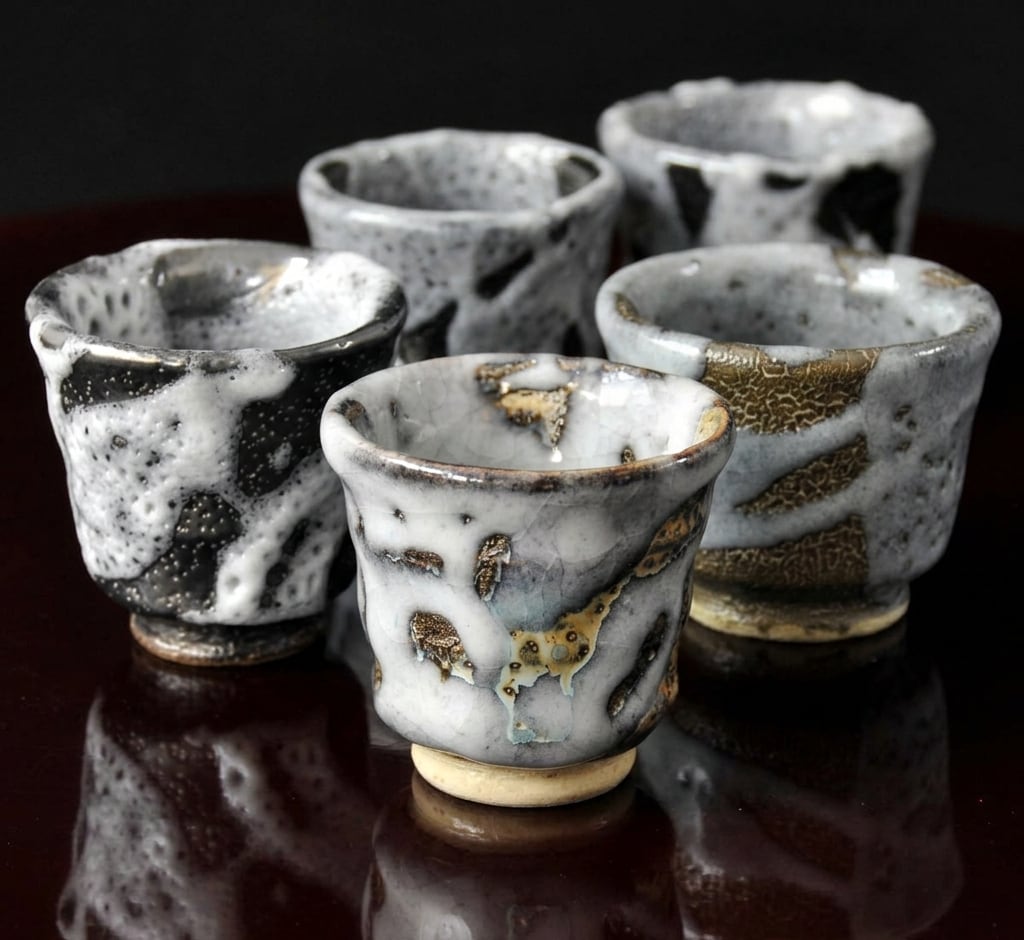
This online gallery presents guinomi (small sake cups) and sake vessels by Keizo Hagihara.
Each piece is shaped by his distinctive, original glazes, resulting in pieces where no two are ever alike.
His pottery belongs in life’s quieter moments, offering a subtle yet unmistakable presence.
Each piece is meant for those who truly appreciate its quiet beauty.
Available exclusively through this online gallery.
→ Before You Purchase (Important Information)
Keizo Hagihara (1927–2021)
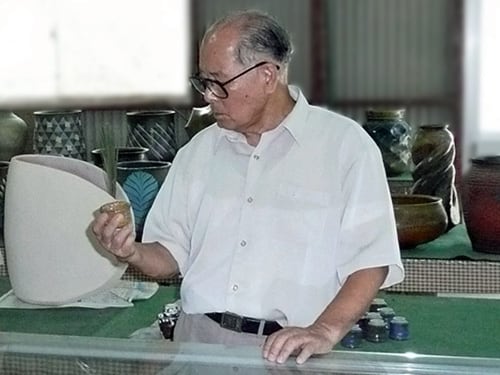
Keizo Hagihara was a ceramic artist based in Kagoshima, in southern Japan.
Working in the tradition of Japanese studio pottery, he created vessels that embrace the natural shifts in form and glaze that occur during firing, allowing the kiln to play an essential role in the final result.
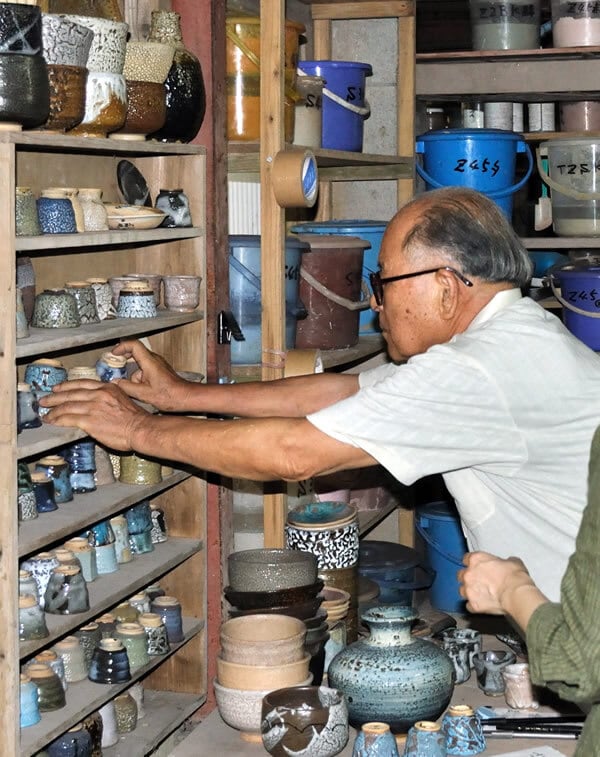
Throughout his career he devoted particular attention to the study of glazes, developing many original formulations of his own.
Among his experiments was the use of volcanic ash from Sakurajima, the active volcano overlooking Kagoshima Bay. This local material gives his glazes a distinctive texture and depth, contributing to the quiet richness of his surfaces.
Keizo’s vessels possess a calm, understated character that resonates with the sensibility of wabi-sabi.
Though made as everyday wares, they reveal their beauty gradually through use — in the balance of the form, the softness of the glaze, and the subtle traces left by the kiln.
Today, his works are appreciated by collectors who value the individuality and quiet depth found in Japanese studio ceramics.
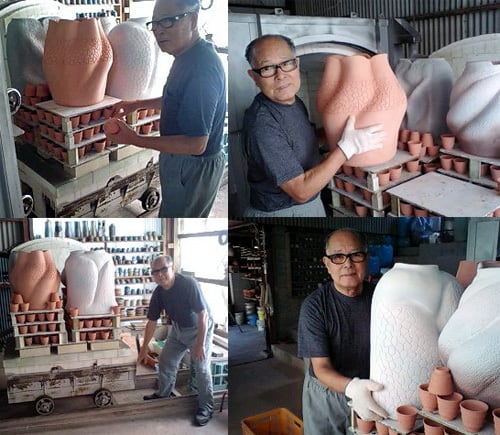
A Legacy in Clay and Spirit
In 2021, the journey of potter Keizo Hagihara came to a quiet close. The vessels remaining today are more than just objects; they are a profound record of his years spent in the kiln, dancing with fire and refining his unique glazes.
We maintain this gallery to ensure that the "landscapes" Keizo loved continue to find a place in the modern world.
Every piece offered here is an authentic work, preserved directly from the artist’s own studio.
From the tactile warmth of the clay to the distinct seal inscribed on the base, each element stands as a testament to the life and spirit of Keizo Hagihara.
Notes from Keizo
[050] The difficulty of layering glazes
When several glazes are applied generously in layers, the colors that emerge can hold a depth and quiet variation that a single glaze cannot produce.
One example is Keizo Mushikui Guinomi “Cosmos” (not for sale).
Among my works using layered glazes, this piece was particularly demanding from a technical point of view, yet it fired in a way that came close to what I had imagined.¹
Applying glazes in layers takes time.
First the initial glaze is applied. After it has dried completely, a different glaze is applied for the second layer.
Only after that has dried fully can the third glaze be added.
What matters most is allowing each layer to dry thoroughly before the next is applied.
If even a small amount of moisture remains, the piece may come out of the kiln with the glaze blistered, swollen, or partially peeled away.
Applying several glazes with different characteristics—thickly and generously—also requires care and patience.
Yet it is this generous application that allows the small pits known as mushikui² to appear.
And it is the layering of different glazes that brings out the depth of color.
Over the years I have repeated many failures while searching for a kind of beauty that feels right to me.
For that reason, when a piece finally emerges from the kiln in a satisfying way, the feeling is quietly rewarding.
And when I read the impressions of people who have held these pieces in their hands, I feel deeply grateful as a maker.
Many of the people who read these notes are not only those who have purchased my work, but also those interested in ceramics, or studying the craft themselves.
If it may be of some use, I sometimes offer pieces that did not succeed—such as those where the glaze has partially fallen away.
Simply observing how these pieces turned out may offer small hints for those making ceramics, or for those who enjoy looking closely at them.
If these notes can serve as a small reference in some way, I would be glad.
¹ This work is no longer available.
² Mushikui: small pits that appear in the glaze surface.
(October 10, 2006)
[053] A New Guinomi
At the moment I am working on a new guinomi.
The pieces I make often carry glazes that are applied thickly and generously.
They have a soft, warm feeling, and in many ways I feel this is closest to my own way of working.
My aim has always been to make something that feels truly my own—something you would not find anywhere else.
Yet, as I have written before, even after many years of experience the colors do not easily come out as I imagine.
In truth, success is the rarer outcome.
What I am now attempting is a new type of guinomi: a dark surface, slightly touched with blue-green, over which three different glazes—including a milky white—are layered.
To achieve the color I am looking for, it is not enough simply to apply three glazes one over another.
If the intended glaze is placed directly on the base glaze, the two tend to mix, and the clarity of the color is lost.
Because of this, additional glazes must be placed between them—each serving as a kind of bridge.
Even then, the process is not simple.
Each glaze has its own character, and some combinations do not work well together.
There are also glazes that erase the kairagi texture that I value, so careful balance is required.
Still, I would like to create a piece where the clear contrast of black and white is joined by more subtle colors.
I do not know when it will happen, but I hope that one day I will be able to present a piece that truly feels complete.
(November 8, 2008)
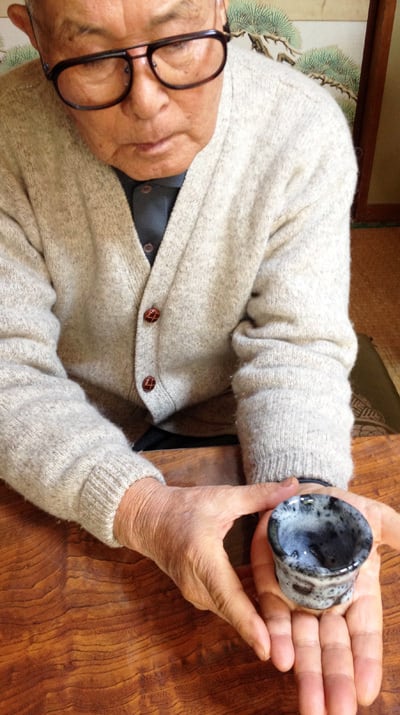
A Favorite Piece: Keizo Mushikui Guinomi
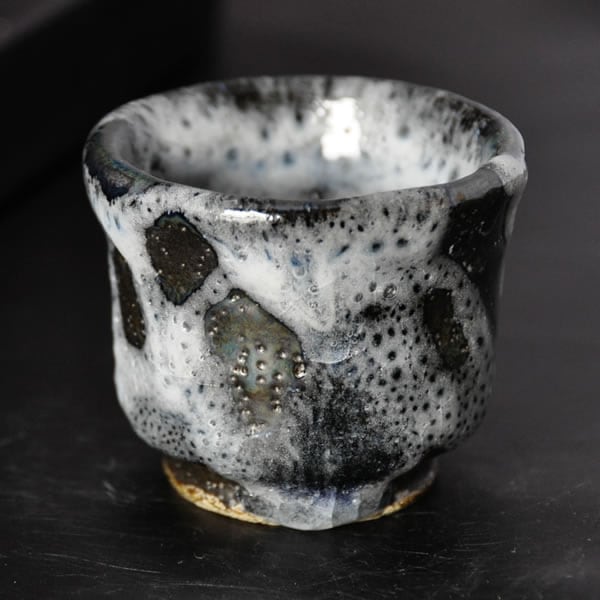
On March 1, ceramic artist Keizo Hagihara turned 87.
His hearing has grown a little weaker, and his legs often trouble him, but his desire to continue making pottery has not faded.
On this occasion, he spoke again about one of his favorite guinomi.
When asked what makes this piece different, he answered immediately:
“The mushikui appear not only in the black glaze of the base, but also in the milky glaze layered above it. That is what makes it special.”
He spoke about how difficult it was to achieve, and how happy he was when it finally appeared.
As he said this, Keizo looked at the piece quietly in his hands, almost as if he were looking at something dear to him.
Watching him, it was easy to feel how deeply satisfied he was to see the work turn out just as he had hoped.
He repeated several times that this was a piece that had taken many years of effort to achieve.
At first glance the work may appear simple, yet the beauty comes from several layers of glaze that have fused together in the firing.
As he looked at the piece, there was a sense that his gaze held a quiet affection for the work itself.
(March 8, 2014)